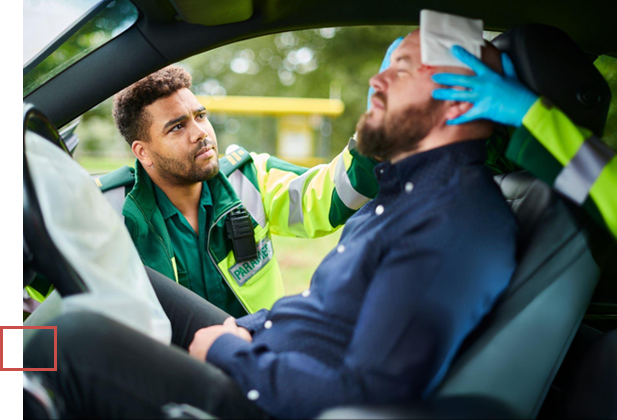

The word “mild” does a lot of damage in these cases. A doctor writes “mild traumatic brain injury” or “concussion” in the chart, and to the insurance company, that reads like a bruise that will heal in a couple of weeks. For many people, it does. For others, the headaches, fog, and memory lapses hang on for months, sometimes much longer, while the claim is valued as if they’d walked away with a sore neck.
Here’s why concussion claims get undervalued after a Virginia car crash, and what it takes to change that.
“Mild” Is a Medical Label, Not a Prediction
Doctors grade brain injuries mostly by what happens in the first minutes and hours: how long someone was unconscious, how confused they were, and what the Glasgow Coma Scale showed in the emergency room. A person who never blacked out, or was dazed for only a moment, will usually be labeled mild.
That label says nothing about how the next year will go. Some people develop post-concussion syndrome, a cluster of symptoms that can include headaches, dizziness, trouble concentrating, irritability, light sensitivity, and poor sleep long after the crash. A middle school teacher who can no longer keep up with a full classroom, or an electrician who now second-guesses every wiring diagram, has a serious injury regardless of what the ER chart says.
Why the Symptoms Show Up Late
Right after a crash, adrenaline and the focus on obvious injuries, like a broken wrist or a cut forehead, can mask brain injury symptoms. People are often sent home without a concussion diagnosis at all. Over the next few days, things start to feel off:
- Headaches that don’t respond to over-the-counter medicine
- Losing track of conversations or forgetting why you walked into a room
- Feeling unusually irritable, anxious, or flat
- Needing far more sleep, or barely sleeping at all
Insurers seize on that delay. If the first mention of memory problems shows up two weeks after the accident, the adjuster will argue something else caused them. The best protection is to go back to a doctor as soon as symptoms appear and describe all of them, including the ones that feel embarrassing or hard to put into words.
How Insurers Build a Low Number
Several things work against concussion claims at the negotiating table, and a catastrophic injury lawyer will usually see all of them coming.
- Claims software favors visible injuries: Many large insurers use computer programs to value bodily injury claims. Those systems respond well to fractures, surgeries, and documented diagnoses. A concussion with a clean scan and a few follow-up visits often gets valued like a soft-tissue strain.
- Gaps in treatment become “proof” of recovery: People with mild TBI often stop seeing doctors because nobody gave them a clear treatment plan, not because they got better. Insurers read the gap as healing.
- Symptoms get blamed on something else: Stress, depression, a prior headache history, or simply getting older. The more common a symptom is in everyday life, the easier it is to argue it has nothing to do with the crash.
- The person looks fine: On surveillance video or social media, a person with a concussion looks like anyone else. Brain injury rarely shows up in a photo.
Imaging That Misses the Injury
A standard CT scan in the emergency room is designed to answer one urgent question: is there bleeding, swelling, or a fracture that needs treatment right now? It isn’t designed to detect the kind of microscopic stretching and shearing of nerve fibers that often causes concussion symptoms.
A routine MRI is more sensitive but can still come back normal. In some cases, specialized sequences such as susceptibility-weighted imaging can pick up tiny areas of bleeding, and diffusion tensor imaging may suggest damage to the brain’s white matter. These tools aren’t available everywhere, and the defense often challenges how the results are read. A normal scan doesn’t mean nothing happened. It means the scan wasn’t the right tool to see it.
Neuropsychological Testing: Measuring What Scans Can’t
When imaging falls short, neuropsychological testing often fills the gap. A neuropsychologist uses standardized tests to measure attention, memory, processing speed, language, and problem-solving, and compares the results to what would be expected for someone of the same age and education.
Good testing also includes validity measures that check whether the person gave full effort. That matters, because one of the defense’s favorite arguments is that the injured person is exaggerating. Results that pass validity checks and line up with the person’s symptoms, history, and work demands carry real weight.
What Mild TBI Damages Can Include
When the injury is properly documented, a concussion claim can account for far more than the ER bill:
- Ongoing care, including neurology, vestibular therapy for dizziness and balance, vision therapy, speech or cognitive therapy, and counseling
- Lost income during recovery, plus reduced earning capacity if the person can’t return to the same role or the same hours
- Pain and suffering, including chronic headaches and sleep problems
- Loss of enjoyment of life, from giving up reading to skipping the drive to a child’s game because traffic now feels overwhelming
In a smaller number of cases, a so-called mild injury turns out to have permanent effects on work and independence. At that point, it should be valued as the life-altering injury it is, often with input from a life care planner and an economist, and with guidance from a catastrophic injury lawyer who knows how to present it that way.
Virginia Issues to Keep in Mind
Virginia’s two-year statute of limitations applies to most injury claims, and slow-developing brain injury symptoms don’t stop that clock. Virginia’s contributory negligence rule also means an insurer may look for any reason to put some fault on you, which makes careful handling of early statements important. And because settlements are final, accepting an early offer before your doctors understand the long-term picture can leave you paying for treatment on your own.
Protecting a Concussion Claim
- Get checked again if new symptoms appear, and say the words “head injury” or “concussion” to your doctor.
- Ask for referrals to a neurologist or concussion clinic, and follow through.
- Keep a daily log of symptoms, missed work, and things you can no longer do comfortably.
- Don’t settle quickly. Brain injuries often take months to reveal their full effect.
Hurt in a Crash and Still Not Feeling Like Yourself?
As a catastrophic injury lawyer team in Newport News, we see how often concussion cases get waved off as minor, and we push back with evidence. At Coletrane & Messersmith, we work with your treating doctors, arrange neuropsychological evaluations where appropriate, and gather the testimony that shows how your life has changed since the crash.
We handle the insurers and the deadlines so you can focus on getting better. If you’re dealing with headaches, memory problems, or fog after an accident anywhere in Hampton Roads, call us for a free consultation.